
My 2025

Resignation
The article I posted at the end of last year contained a lot of information. Right at the beginning, I mentioned:
“Even though this piece is already quite long, I’m afraid I still have to hold some things back. Some of you know the reason, some of you don’t. For those who don’t, there is no need to guess blindly. Next year, I will strive to update once every six months and practice my writing more.”
From My 2024 Summary (in Chinese)
I spent a long time deliberating over and editing those sentences. The thing I was “holding back” was naturally related to my resignation, but it wasn’t the right time to burst the bubble, so I chose to cover it up with the “every half year” promise. I wonder if any readers actually guessed what I was holding back?
However, it didn’t stay hidden for long; I handed in my notice shortly after New Year’s Day. The bosses hoped I would keep it confidential—probably because the end of the year is when people’s minds tend to wander, and they were worried about shaking the team’s morale.
My boss mentioned that he had noticed my state wasn’t great as early as last October. He thought I was just overtired, never expecting that I was planning to quit. Actually, that October was right when my visa was approved and was the first time I thought about resigning, so I admittedly slacked off a bit. But in the end, I felt it was too rushed: on one hand, when the visa came through, the Q4 planning was already done, and I really didn’t want to disrupt the plan; on the other hand, if I stayed for two more months, I could get my year-end bonus, so leaving early wasn’t financially strictly wise. Plus, spending the Chinese New Year here before leaving seemed like a nice idea.
After January arrived, determining a resignation strategy that maximized my benefits wracked my brain. I was resigning voluntarily, and I had neither the possibility nor the desire to “quiet quit” or slack off for half a year, so a severance package was almost certainly out of the question. If I resigned early, the bosses would have fewer variables when doing Q1 and annual planning, and the handover would be calmer, but my performance rating would be at risk—would my year-end bonus shrink? When resigning, what reason should I give? If I was too specific, would it trigger the non-compete agreement?
I thought about it a lot, but my final strategy amounted to having no strategy: I brought it up first thing in the morning, “confessed” everything, and gave the pressure of choice to the boss. Judging by the results, I had a good boss. Thank you, boss.
Before my “Last Day,” I casually recorded some videos of my commute, thinking I’d share some experiences. After all, if I could see familiar faces even on the train, surely there must be an audience for this. However, after posting the “Outbound Trip” edition, the significance of the article was questioned, as expected. I lost interest and buried the material for the “Return Trip” edition. Today, those brilliant train-catching tips of mine have been completely forgotten. A pity, truly a pity.
The Qinghai-Gansu Loop
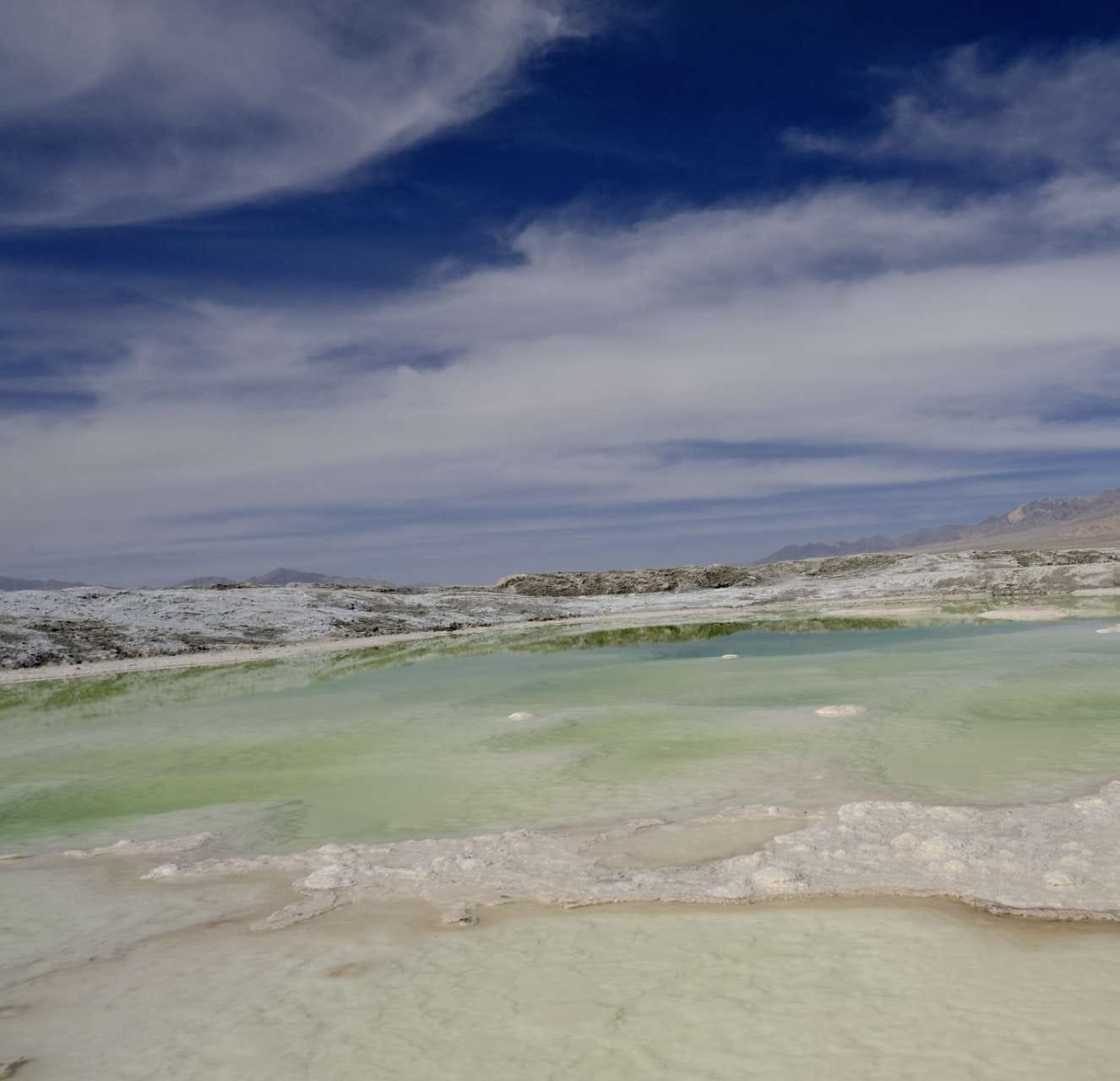
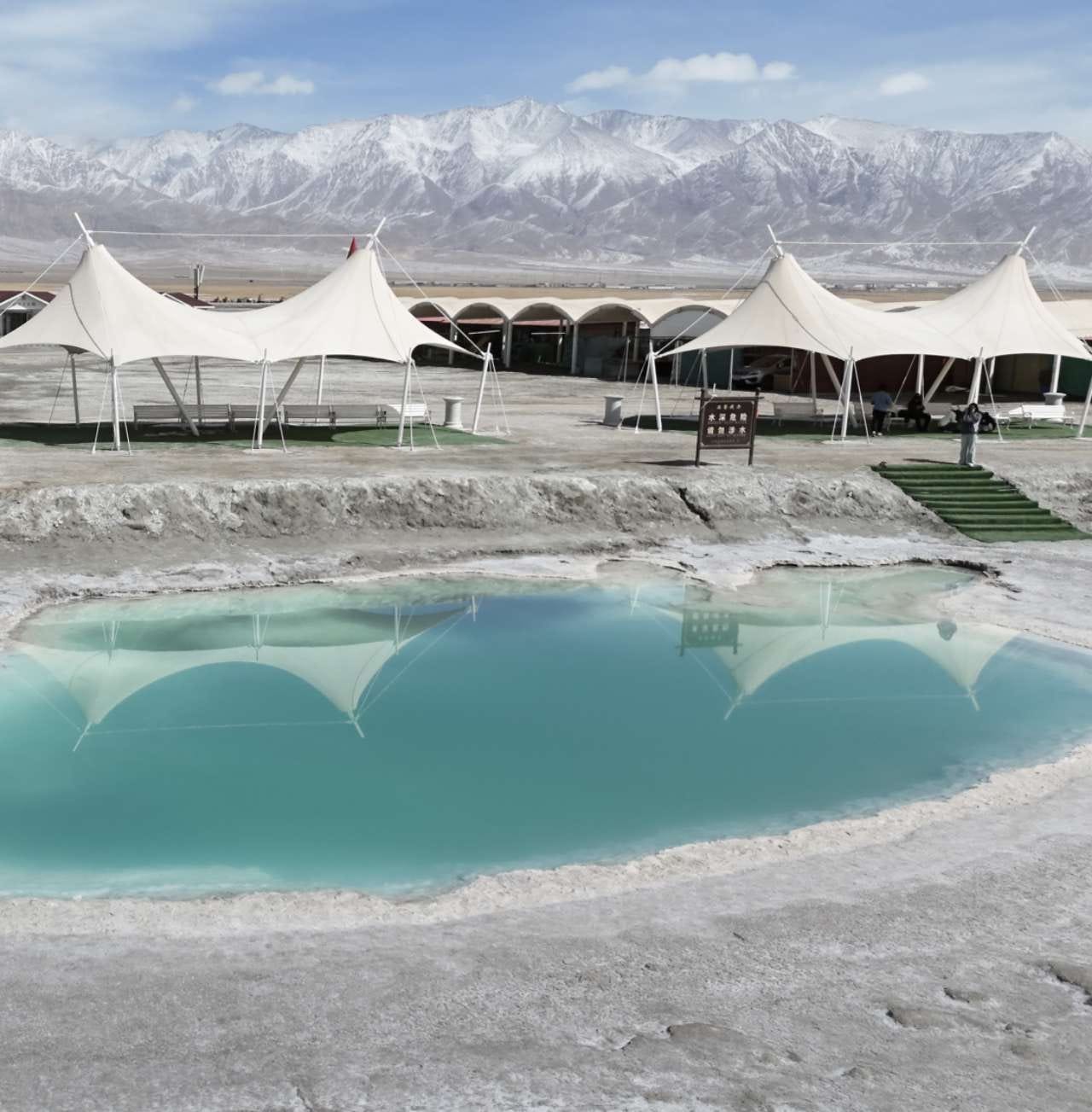
What you see in video works and what you experience in the real environment are indeed different. Aside from the more direct visual impact—for instance, snow-white under real sunlight perhaps exceeds the limits of what a screen can display—there is the tension brought on by altitude sickness, which perhaps adds a dash of excitement. That dry, biting wind blew out the desolation of the Northwest, and also brought a slight taste of blood to the nose and throat; these are details that film footage cannot capture. When you spin around in a circle and see snow-capped mountains on one side and lake water on the other, with no blind spots and without the dizziness of VR, you become even more convinced: It’s so good to be here.
Seattle
If stepping one foot across the China-North Korea border on the Yalu River Bridge for a few seconds doesn’t count, then this was my first time going abroad.
At customs, I held up my classmate’s address in Redmond and said I was going to Seattle, which led to a long challenge—they are two different cities.
Due to jet lag, I was groggy for those few days and didn’t visit many places. Two spots left a deep impression.
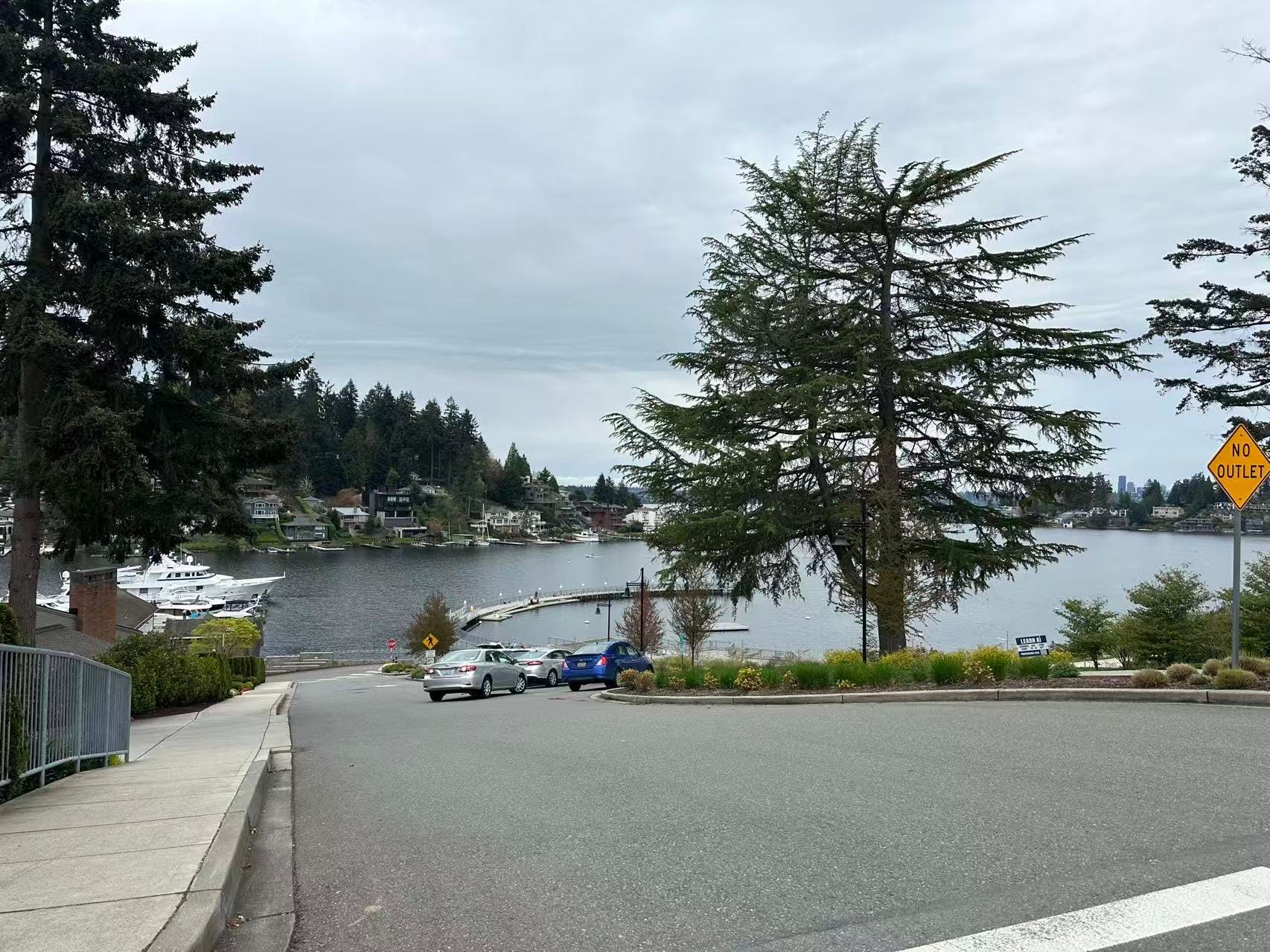
The first was Meydenbauer Bay Park. We stayed in downtown Bellevue. We got up early in the morning to wander around, and soon walked into this park. Entering the park felt like entering a forest; the vegetation was lush and the air was fresh. Passing through the short stretch of woods, the view suddenly opened up, and surprisingly, we were at the lakeside. Many yachts were docked at the shore, and children were playing on the playground equipment. During the walk, we also saw a small Japanese-style courtyard with a cherry tree planted in it.
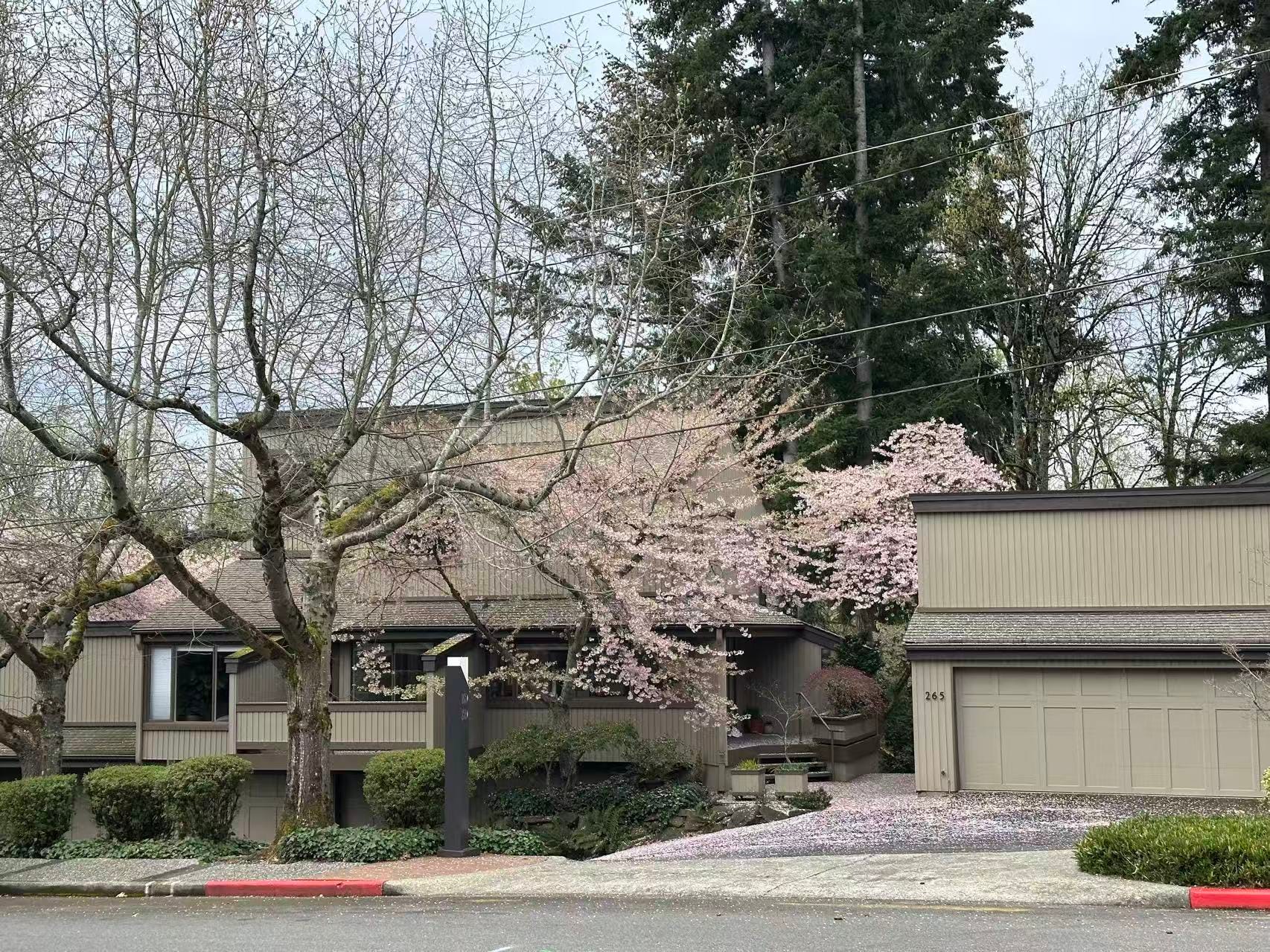
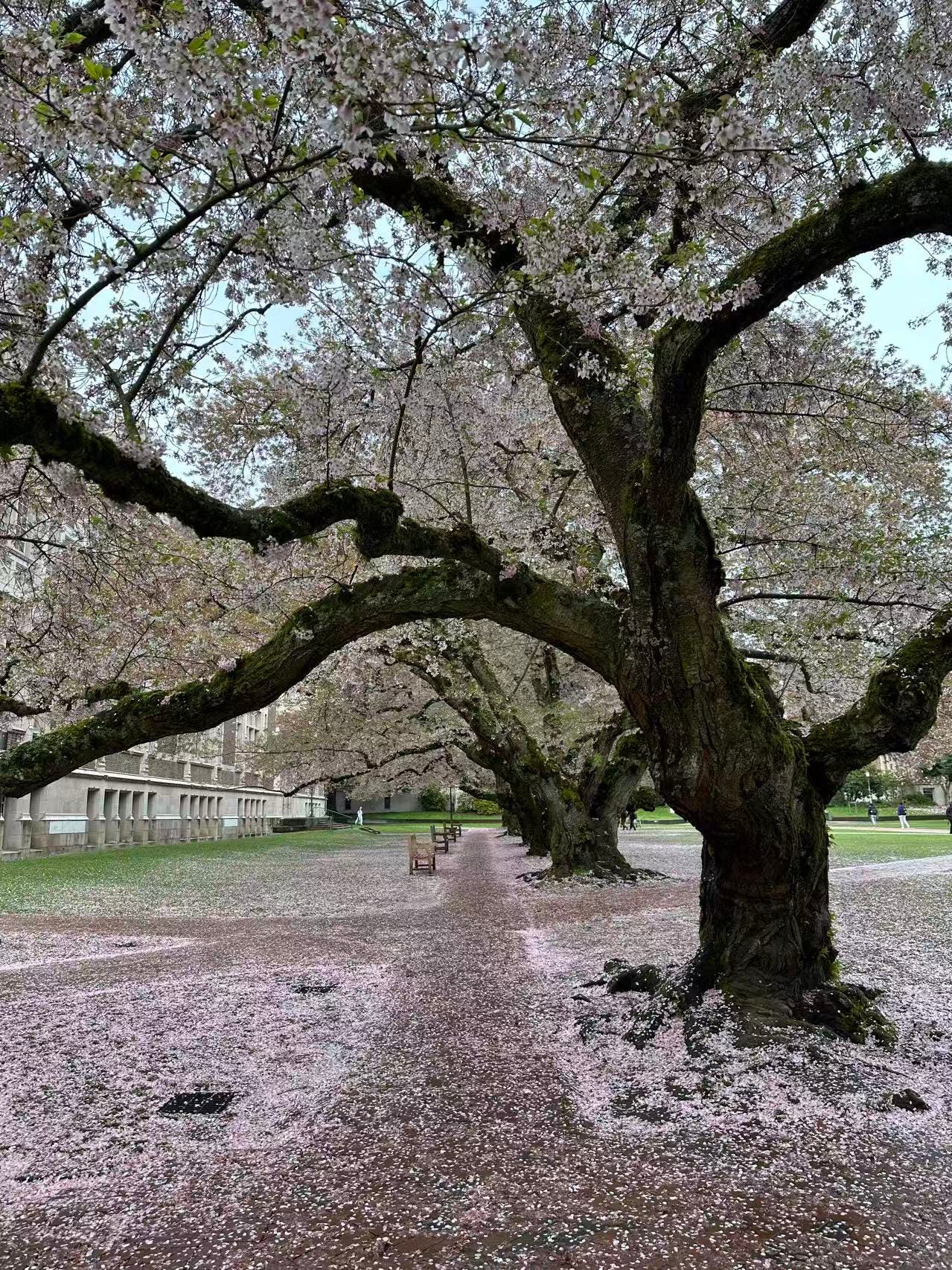
The second place was the University of Washington. Early April happened to be cherry blossom season, and it was just after the rain. The cherry blossom garden at UW, with petals falling in colorful profusion, had a unique scenery. If you don’t see this loop, you might find it hard to understand what a “romantic campus” really means.
Arrival in Canada
A few days later, I took an early morning flight from Seattle to Toronto. Customs entry was another ordeal. My first time ordering Subway in English at the airport was a massive failure; I seemed only able to recall how to say “tomato.” However, fingers can express a lot of meaning, so it didn’t stop me from getting food.
Next, I took a bus, then a train, and finally an Uber to my accommodation. By the time I settled in, it was pitch black. The weather in April was still cold, so I took a taxi to the school food court and ate a bowl of Rice Noodles (Mixian). This restaurant became a place I visited often later on.
The next day, it actually snowed heavily. It seems the saying that “half the year is winter here” is true.
I braved the snow to handle banking matters. The next few days were mainly spent solving the housing issue, looking at apartments everywhere.
Later came buying furniture and assembling furniture. Basically, the entire month of April, and even including May, was spent setting up the new nest.
English
Aside from the failed Subway order, there were many other awkward moments. For example, if a server cracked a casual joke and I didn’t understand it, it’s not really appropriate to ask them to repeat the joke. They would probably just say “never mind.”
Of course, many issues aren’t purely due to rusty English, but rather a lack of understanding of certain habits. For instance, after ordering, they might ask for the initials of your name to call out the order. Subway bread, Tim Hortons bagels—they all have different choices: white bread or whole wheat? An “Everything” bagel or a plain bagel? Oh, and even ordering a combo with eggs at a breakfast place requires choosing: scrambled? Fried? Sunny-side up? Over-easy? Well done?
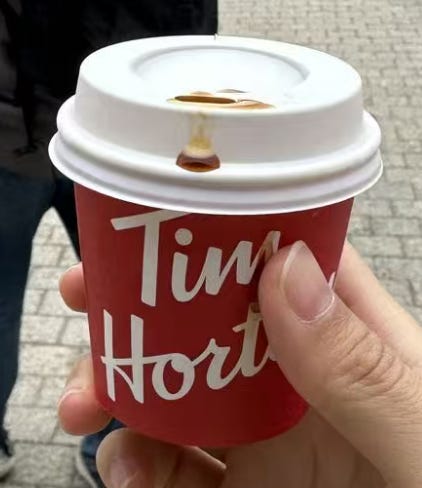
A deeper impression was left by a visit to Tim Hortons to order coffee. I thought, since I was a bit sleepy, I’d just order an Espresso. The staff confirmed with me twice, which made me a bit uneasy. It wasn’t until I got it that I realized this coffee was concentrated into a cup the size of half a fist. This was the first time I’d seen such a small coffee cup—yet I couldn’t even down it in one gulp, as it was a bit bitter and a bit hot. I didn’t become less sleepy because I drank it—I was already wide awake the moment I saw it placed on the counter in full view of everyone—because I had to go and pick it up. It seems this small cup is usually used to mix into other drinks, but I just drank it straight.
Despite hitting walls often with English in daily life, classes are actually quite simple. If you frequently watch lectures and open courses on YouTube, professional English won’t be a big problem. However, even so, it’s not all smooth sailing. Graduate classes require presentations and often require discussions with classmates. I used to think Indian accents would be the difficulty, but I didn’t expect the Nigerian accent to be even more challenging.
Spring, Summer, Autumn, Winter
Although winter might take up six months, the four seasons are complete here. Compared to the ruthlessness of Beijing where winter arrives overnight, it’s a bit like Jiangnan (regions south of the Yangtze)—it’s just that the distribution of the seasons is completely different.
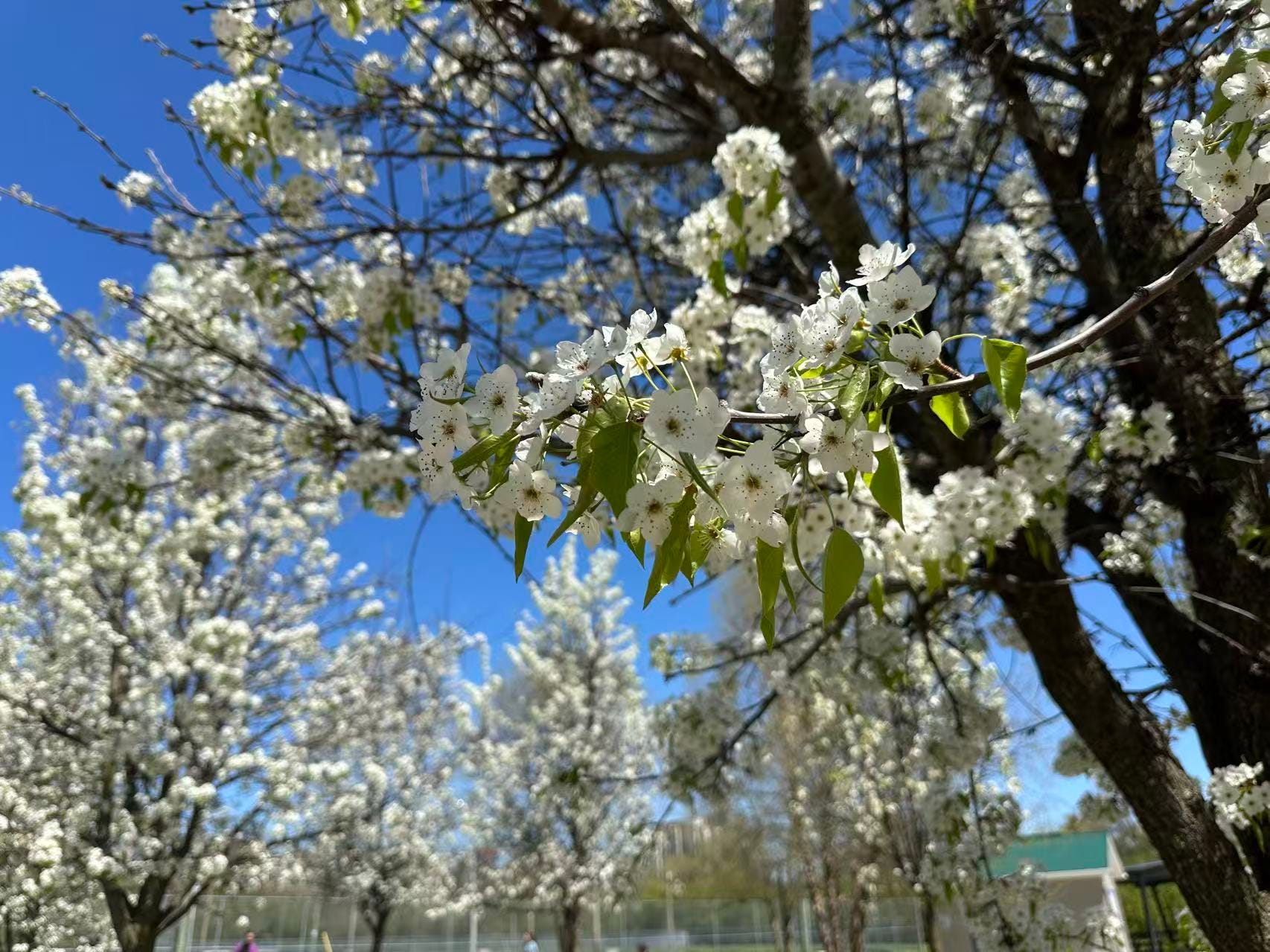
In mid-April, everything is still bleak, with only withered branches. But by the end of April, flowers and grass gradually reveal their colors. May is the season when flowers are in full bloom.
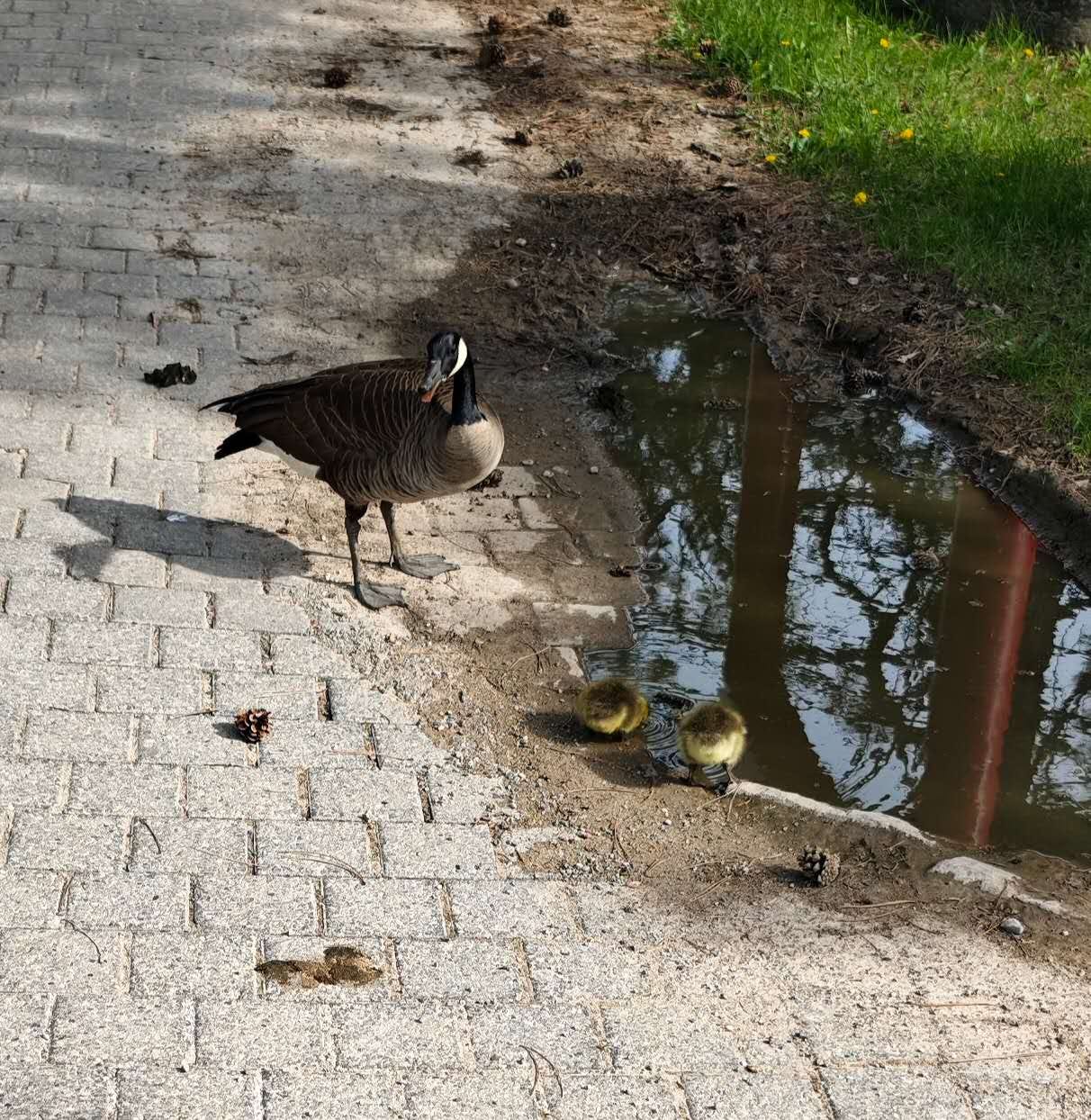
Oh! It’s also the season when the Geese protect their young. The Geese are quite fierce at this time; if I get slightly close to their babies, they stretch their necks out at me.
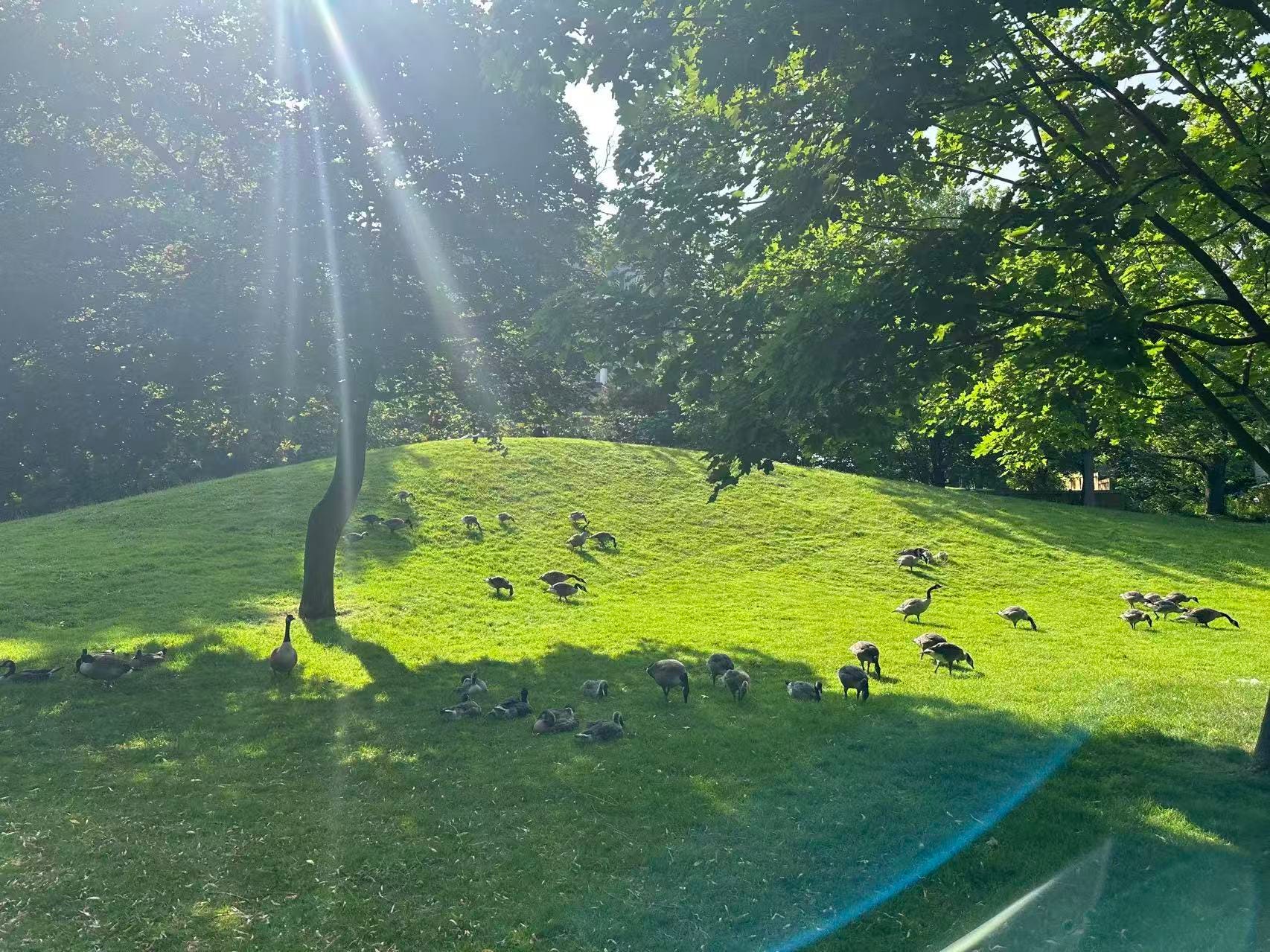
In summer, the days are very long and the sunlight is piercing. Although it is sunny, it isn’t very hot. There is almost no need to turn on the air conditioner the entire summer.
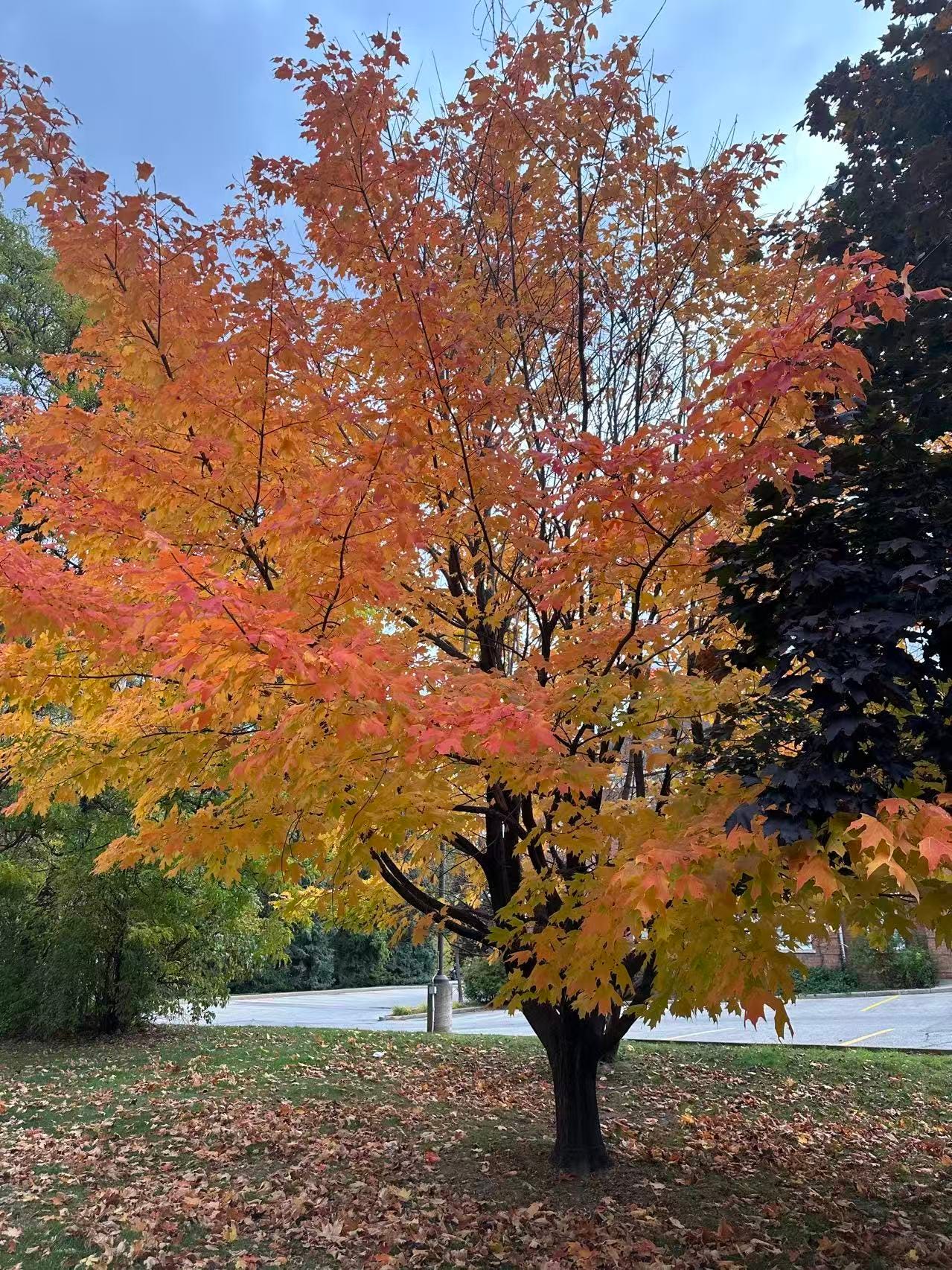
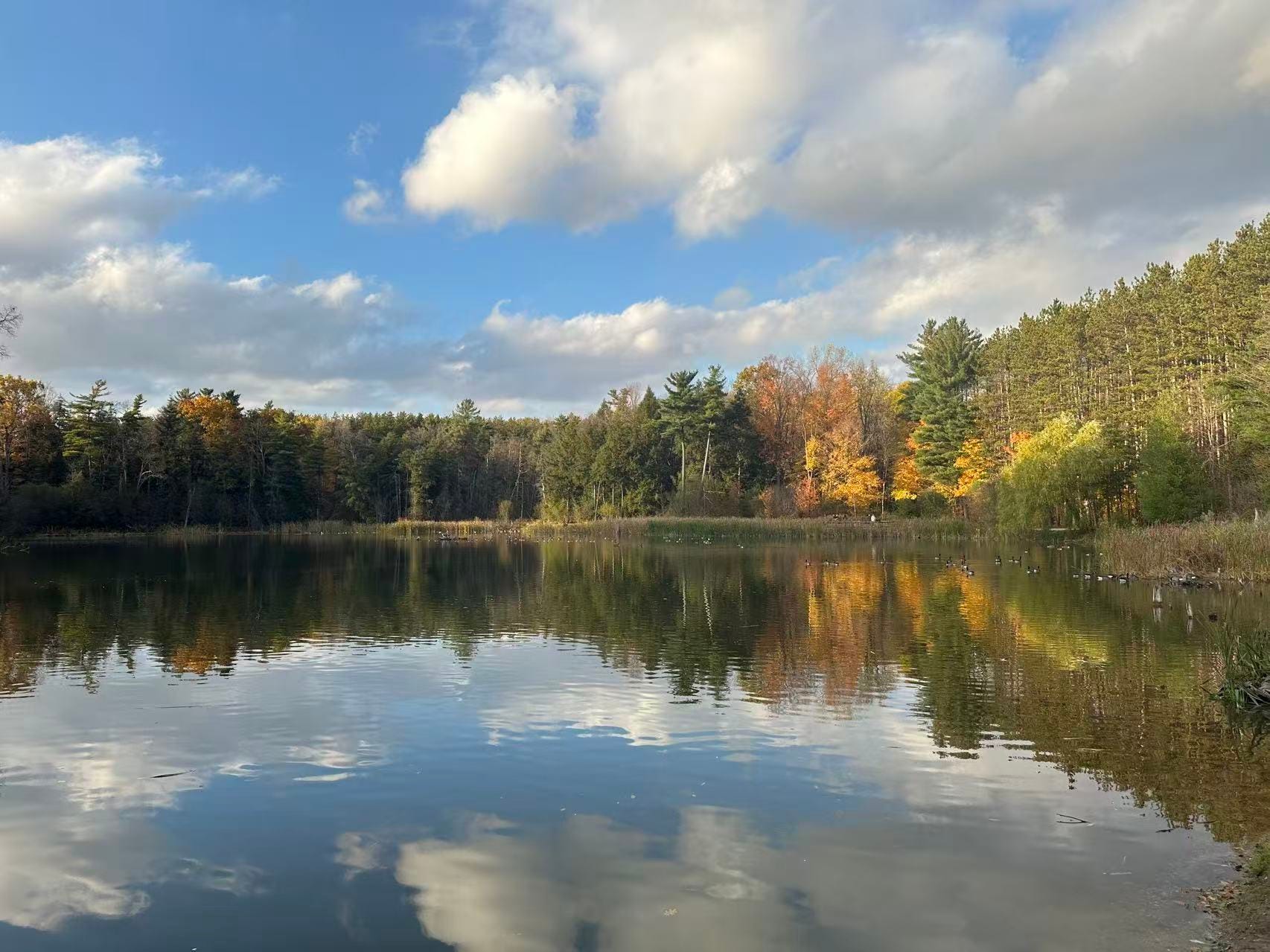
Autumn is the most brilliant and colorful season. In the past, when I went to Tianping Mountain in Suzhou, there was nowhere to park, and what I saw were merely some scrappy red leaves; mostly, I saw a sea of heads. Here, there is absolutely no shortage of red leaves, and there are also very special orange leaves, not to mention the yellow ones. It is beautiful beyond words, and there’s no worry about crowds. The autumn colors I’ve seen before truly pale in comparison.
Perhaps, just as cicadas must seize the time in summer to sing loudly, the leaves must seize the time in autumn to present their most passionate colors. Because not long after, just in November, there will be snow filling the sky.
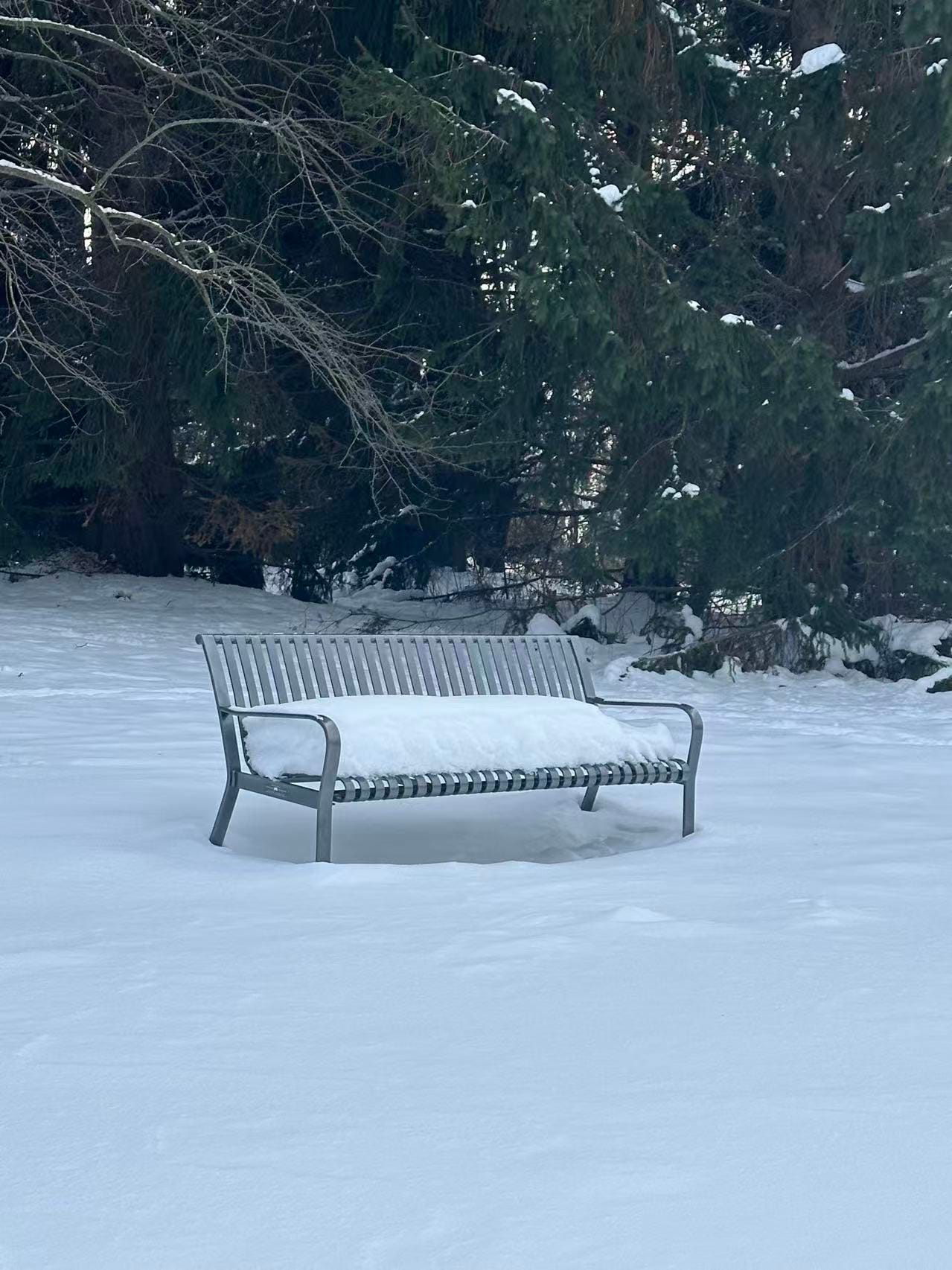
At this moment, stepping on snow dozens of centimeters thick, I happened to see a friend in Suzhou post on their social media marveling that there was ice on the ground.
The snow is often heavy, but the temperature isn’t actually that low; it feels about the same level as Beijing. However, because there is a lot of rain and snow, the climate is quite humid, so I don’t suffer from constant nosebleeds like I did in Beijing. Perhaps the main trouble brought by snow is walking; the sidewalks aren’t always shoveled or salted, so walking on flat ground feels like hiking up a mountain.
Conclusion
I can’t escape the cliché; this year ends with a cold and fever again. I am still maintaining the tradition of getting sick as soon as I have a holiday. It seems my immune system likes to relax along with me. Many people have “Monday Syndrome”; I now have “Holiday Syndrome,” almost to the point where I dare not make any plans for holidays.
Last National Day, I was sick for seven days—cold, fever, asthma, conjunctivitis, and cervical spondylosis; the weekend before my business trip to Beijing at the end of last year, I had a fever (luckily I recovered over the weekend and didn’t delay the trip); before going to the Qinghai-Gansu Loop this March, I also caught a cold (fortunately it wasn’t serious, so I didn’t change the itinerary, though it probably aggravated the altitude sickness to some extent)...
This time, thankfully, the fever came very timely. It flared up before I made any travel plans, so at least it didn’t delay anything.
Cough, cough.
Still coughing. I won’t say more. Going to drink some water.